

The roof of Africa: Kilimanjaro Summary
Last month, my son Luke and I joined a team climbers to summit Mount Kilimanjaro — the tallest free-standing mountain in the world and the highest point in Africa - to raise money and awareness for the work of Global Partners in Hope. This is the story of that climb: the travel, the camps, the long push to the summit, and the trip home. I kept a waterproof journal the whole way (I never go on an adventure without one — thankfully it never rained on us this time), and this account is pieced together from those notes and the itinerary our guides gave us. This is based on my experiences, and others will remember it a little differently. I’ll save the gear notes and lessons learned for another post. For now, here’s how it went.
Getting There (June 22–23)
We landed at Kilimanjaro International Airport (JRO) after more than 25 hours of travel — Omaha to Atlanta, Atlanta to Amsterdam, and finally Amsterdam to Kilimanjaro. It wasn't over yet: another two hours to collect luggage and clear customs, then an hour's shuttle ride to the Weruweru River Lodge. By the time we arrived, the restaurant was closed. We got a quick welcome briefing, checked into our rooms, and collapsed into bed — exhausted and thoroughly jet-lagged.
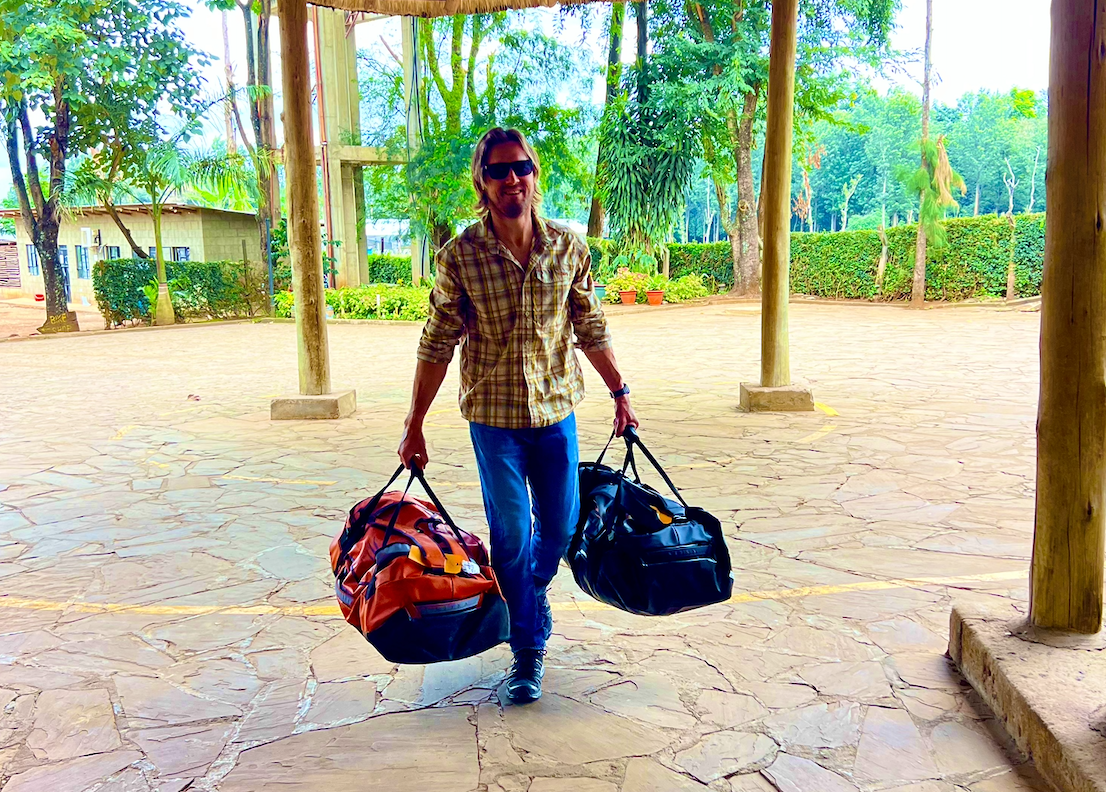
Getting there and Back: Good Luggage is a MUST!
Getting Ready (June 24): Expedition Brief and Gear Check
I woke up around 10 a.m. local time — an eight-hour difference from Omaha — still tired but excited to get moving. After a late breakfast and too much African coffee, our lead guide, Bruno, walked us through the climb day by day. Then he went room to room inspecting everyone's gear. It's the same on every expedition: you pack too much, worry you don't have enough, and second-guess what you put in your pack. There's relief in having an experienced guide look everything over and tell you what you actually need. We repacked our daypacks and the duffel bags, and I felt the familiar mix of excitement and nerves that comes before an expedition like this.
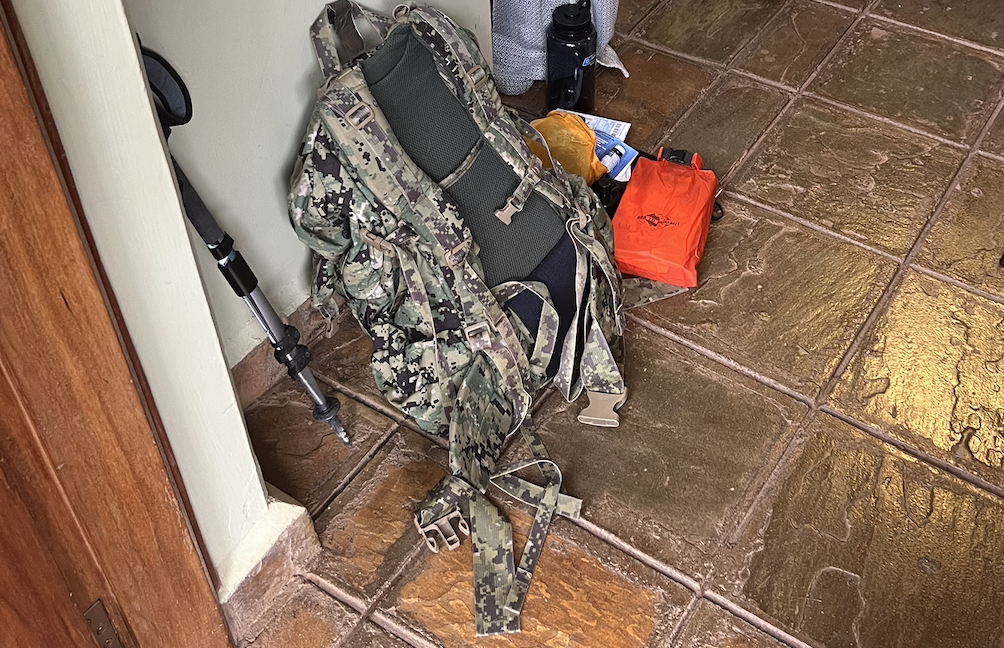
Unpack, re-pack, and repeat… Finally ready to go!
Day 1 (June 25): Departure and the Hike to Big Tree Camp
I woke up earlier this time — 6 a.m., either caught up on sleep or too excited to stay asleep, probably both. I've done enough of these trips (deployments, big climbs, hunts) to recognize the feeling: repacking, second-guessing the gear list, embracing the unknown. After checking out of the lodge and storing everything we wouldn't need on the mountain, we loaded the bus for a nearly three-hour ride to the Lemosho Gate. We checked in with the park service, had a light lunch, and started hiking around 12:30 p.m. Three hours later we reached Big Tree Camp at 9,186 feet — our "shake-out patrol”, covering 4.3 miles and about 1,300 feet of elevation gain. Camp was already set up when we arrived, which was new for me. I filtered water, we ate dinner at 6, and got our first med check and briefing for the next day. Lesson from past trips, repeated to myself here: don't fall in love with the plan — the mountain has its own ideas.
Day 2 (June 26): Into the Forest — Shira 1 Camp
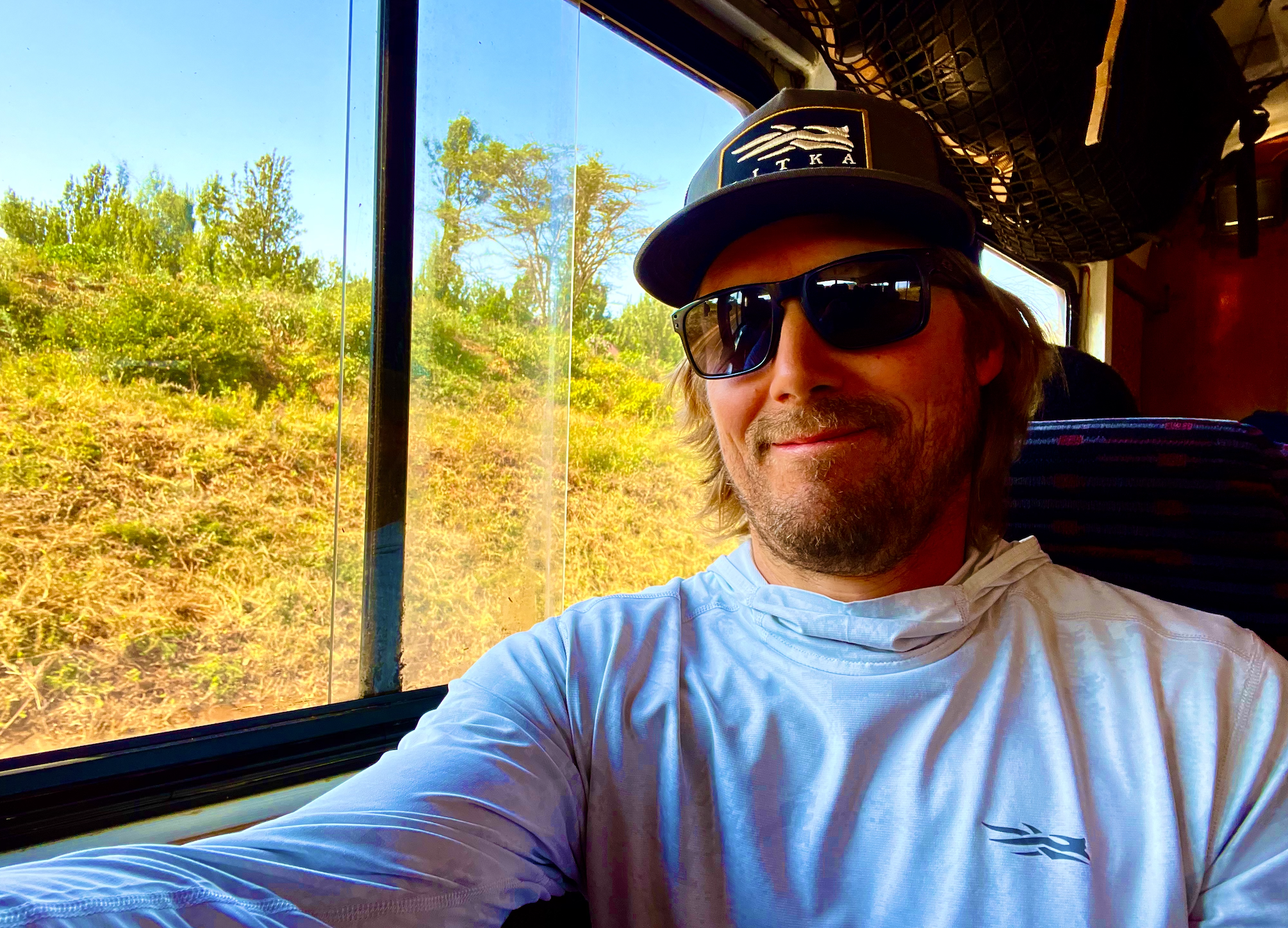
That first night was awful! I was asleep by 8 p.m., but woke at midnight to a forest that had come alive — monkeys, birds, an unbelievable amount of noise. I had to leave my tent to use the bathroom around 2 am, and couldn't help thinking about lions and leopards, even though guides insist they aren't in this area. I was up from midnight to 3 a.m. before finally drifting back off, only to be woken again at 5 by guides shouting to each other in a language I couldn't understand. Colder than expected, but my Sitka gear kept up. After a big breakfast we left camp around 7:45 and hiked through a mix of uphill and downhill forest trail — always a little discouraging, hiking down when the goal is to go up, because you know you'll have to earn that elevation back. We reached Shira 1 Camp around 1 p.m., now at 11,482 feet, after five hours and five miles with a net gain of about 2,300 feet. My feet were sore — no matter how well you break in your boots, "office shape" and "expedition shape" are not the same thing. Same routine that night: dinner at 6, med check, brief, asleep well before 9.
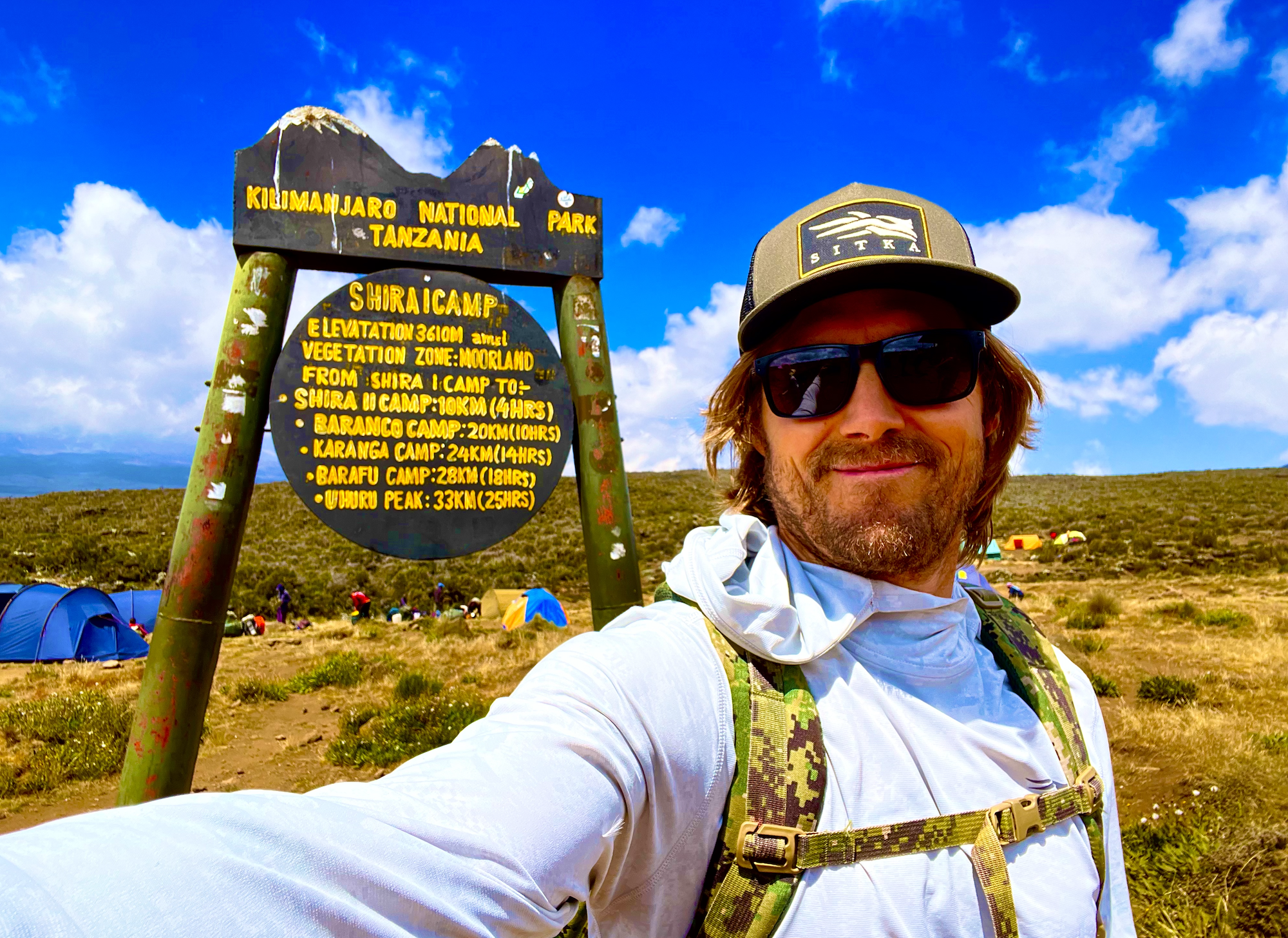
Arriving Shira 1
Day 3 (June 27): Shira 2 Camp and an Acclimatization Hike
Slept through most of the night, save for a 2 a.m. bathroom trip — the price of drinking three liters of water a day to fend off altitude headaches. Leaving a warm sleeping bag in the middle of the night to find a bush by headlamp is, without question, one of the least enjoyable parts of expeditions like this. We left camp at 8 a.m. and covered five miles in four hours, climbing from 11,482 to 12,796 feet. The pace has been easy so far — our guides are clearly making sure we acclimate properly rather than rushing. After lunch and some time relaxing in the sun, we did a short acclimatization hike in the late afternoon, then settled into the now-familiar evening routine: dinner, med checks. These med checks (not new to me) consisted of measuring resting heart rate and pulse oxygen and answering a few questions. What is new to me was having porters carry tents, sleeping bags, extra water, and warm layers. We got a brief for the next day. I spent some time that night filtering water with my Sawyer filter — a piece of gear I picked up years ago on backcountry hunts, and one I trust a lot more than purification tablets, which take forever and leave a bad aftertaste.
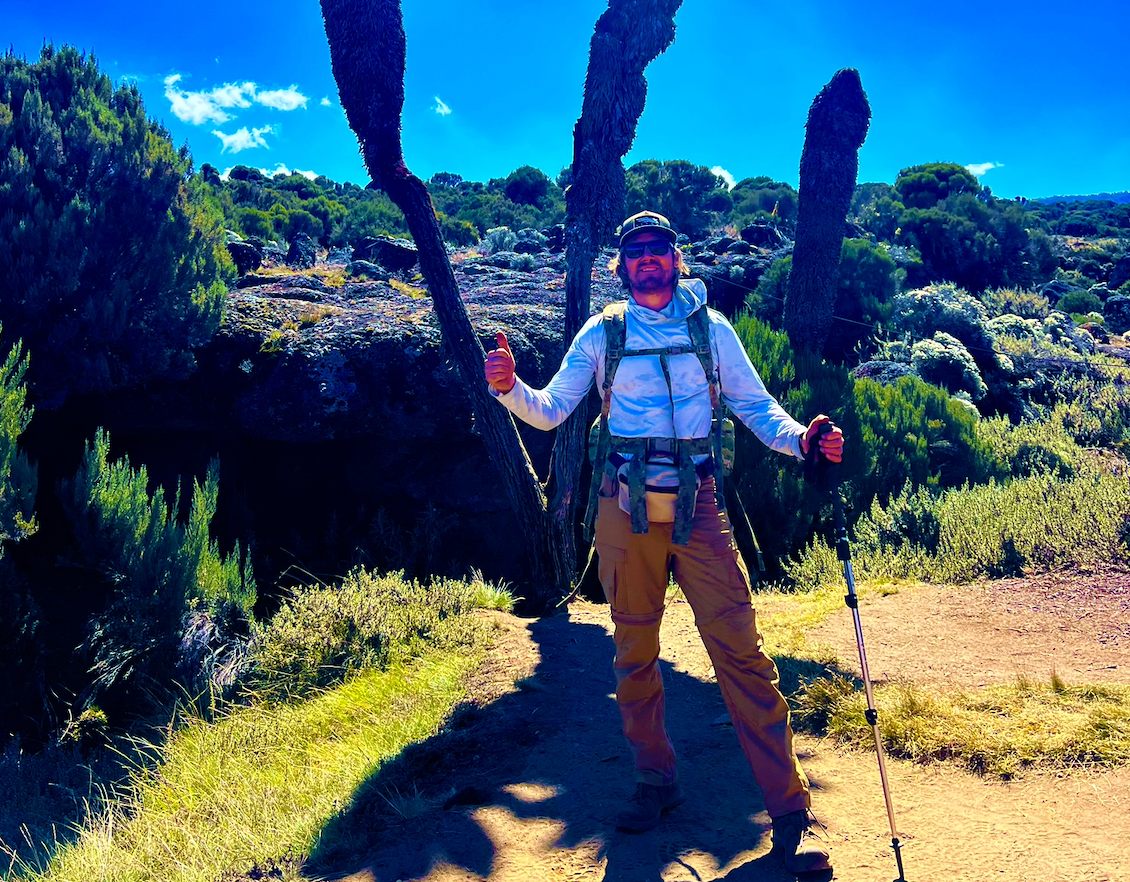
Crazy Tree…en route to Shira 2
Day 4 (June 28): Lava Tower and the Descent to Barranco Camp
Up again around 4 to pee, and this time I just stayed up, made coffee, and waited for breakfast. On the mountain I eat three full meals a day — a big change from my normal routine, but calories, water, and sleep are what keep you upright at altitude. We left camp at 8 and climbed all the way to Lava Tower, 15,223 feet — higher than anything in the Lower 48 — for a light lunch and some time just sitting and breathing thin air above the clouds. After about an hour we started down to Barranco Camp, arriving around 3:30 p.m. at 12,992 feet, barely 200 feet higher than the previous camp despite six miles and a lot of climbing in between. It was our first genuinely long day: four hours up, two and a half back down, losing nearly 2,200 feet on the descent. Sometimes on a trip like this, you go down to go back up. I slept well that night.
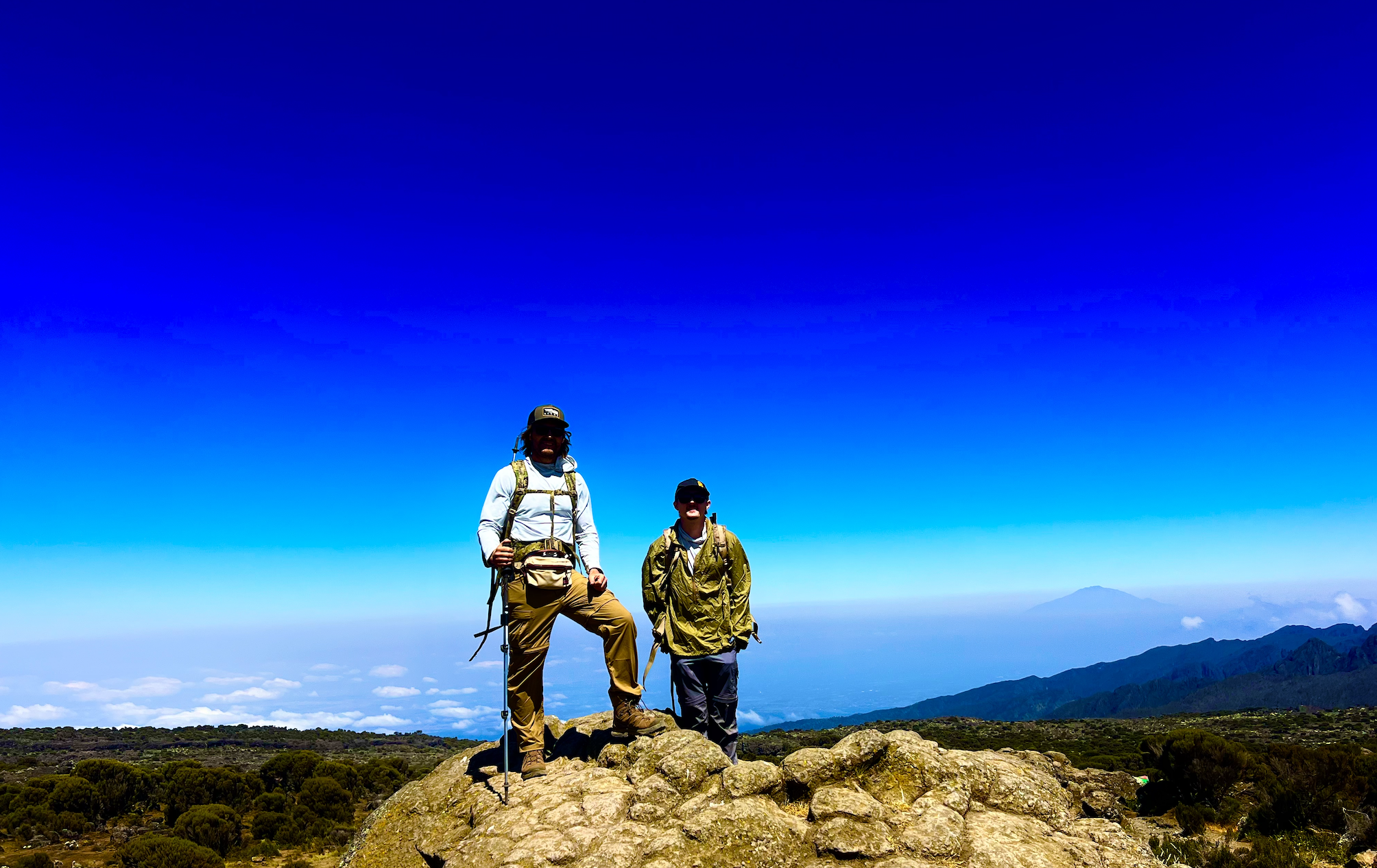
Above the Clouds with Luke
Day 5 (June 29): Climbing the Barranco Wall to Karanga Camp
Great night's sleep, up at 6, colder morning, grateful again for good gear. Today we stowed our trekking poles to scramble the Barranco Wall — no ropes or harnesses on this trip, but a bit of real exposure and plenty of false summits, cresting what looked like the top only to find more wall above us. We topped out by 9:30 and took a break to hydrate and take pictures. Not many miles today, but a lot of up and down; we reached Karanga Camp at noon, just 13,001 feet — another small net gain built on a lot of vertical work. (Every camp has a sign-in book, I should mention — everything here is structured, presumably for safety.) After a late lunch I filtered more water, no complaints given that porters carry it up in buckets. New goal unlocked: to someday climb Kilimanjaro with one of my grandkids! My inspiration: we passed a 75-year old man climbing with his grandson. This mountain is not so hard that I couldn’t make it back in my seventies - assuming I stay reasonably fit and don’t injure myself by overtraining (which is my tendency).
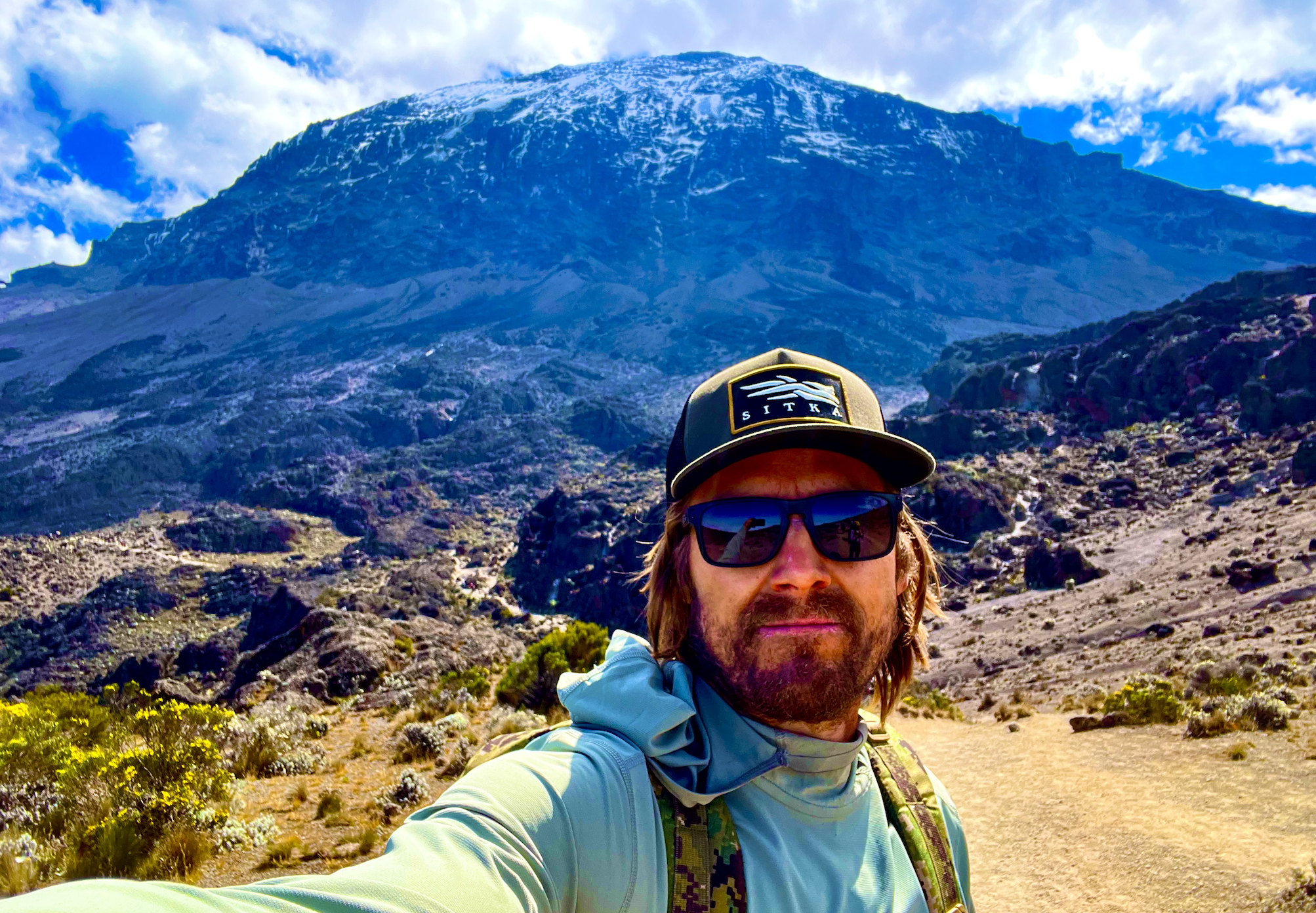
Kilimanjaro looms in the distance
Day 6 (June 30): Base Camp and Final Prep for Summit Night
Up at 7 after a great sleep and some strange dreams — the one I remember was simply jumping into my own bed at home. Funny how much you can miss something that ordinary after a few nights on the ground. We left Karanga Camp at 8:30 and climbed to Barafu Camp — "Base Camp" — at 15,223 feet, higher than any fourteener in Colorado. I'd felt good up to this point, but I knew from past trips that this is where altitude really starts to bite: headaches, appetite loss, and the only real defense is forcing yourself to drink more water. We ate, napped through the afternoon, had dinner, and packed our gear so it (and our water) would be ready by 8 p.m. Then we tried to rest, even if actual sleep wasn't coming — time off your feet matters just as much. Bruno dropped the quote of the trip that night: "Expect the best adventure!" The plan was to wake at 11, have a hot snack, and leave camp at midnight for the summit push. I've done enough summit nights to know the drill: lie down, stay calm, even if sleep won't come, because you're about to be on your feet all night and into the next morning. I debated with myself which base layer to wear and decided to dress warm, as I wasn’t sure of the pace we’d set.
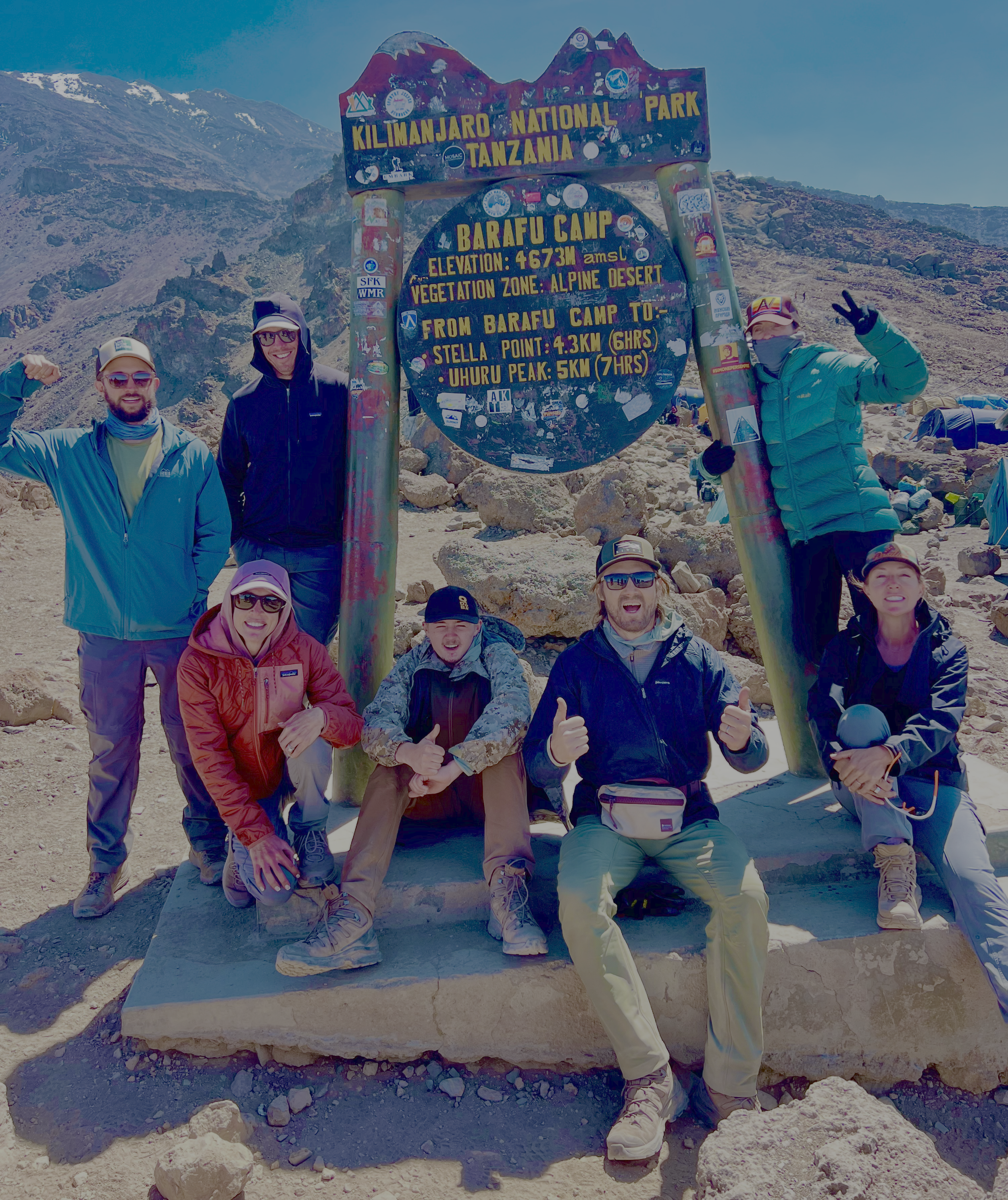
Arriving at Base Camp!
Day 7 (July 1): Summit Day — and the Long Descent to Millennium Camp
Summit day is always the hardest, and this one didn't break the pattern. We left camp at midnight after a snack and a hot drink. I started out overdressed and had to change my base layer at the first stop — no small task, since it means pulling off boots and pants trailside. Then the pace slowed and I got cold, frustrating since I wasn't about to change again. Thankfully things picked back up and my legs warmed. That's one of the realities of climbing as part of a larger group behind other teams: you don't always set your own pace. The night was long but passed quickly, broken up by short breaks to hydrate and adjust layers. The moon was nearly full — I barely needed my headlamp — and I found myself alternating between searching for the summit and just watching the ground in front of me. Experience has taught me not to fixate on the top; it only makes the distance feel longer. Better to stay in what a friend of mine calls "your three-foot world" and focus on the next step. Conversation dropped off almost entirely as the altitude climbed — it's hard to talk when it's hard to breathe — and I spent most of the night lost in thought and in prayer, for our safety, for the other climbers on the mountain, and for my wife and daughters back home. It helped the hours pass. Near the top we stopped for hot tea, and not long after, we reached the summit right at 6 a.m. — rewarded with a sunrise from the top of Africa. We took a group photo, a few smaller ones, and I got a shot with my son Luke. What a view, and what an experience to share with him. We took it in despite the subzero temperatures, then started down.
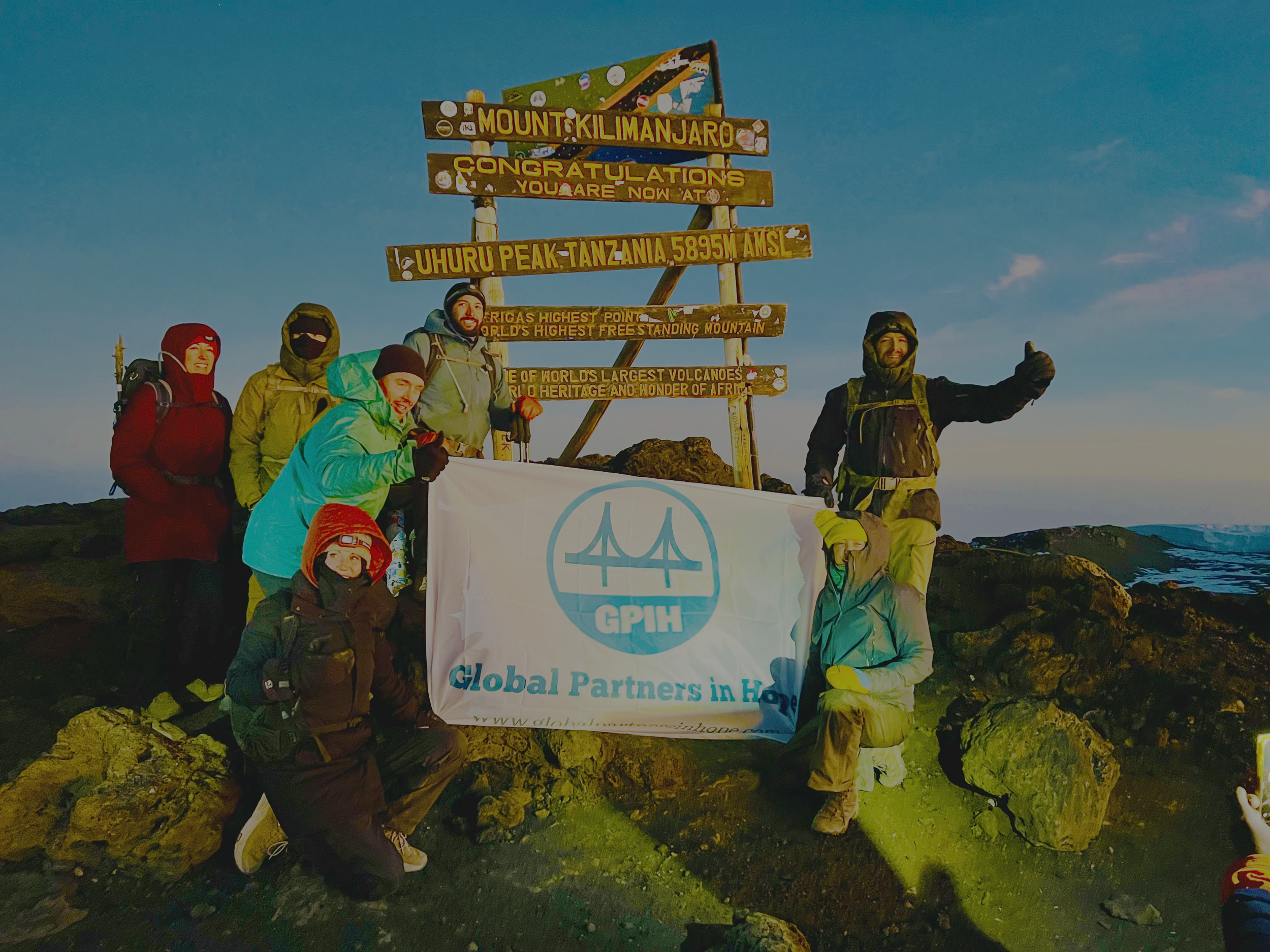
Summit of Kilimanjaro at Sunrise!
We were back at Base Camp by 9, and it was finally time to rehydrate properly — nobody had managed more than a liter overnight, and a few people had headaches (I got lucky and didn't). I slept for a bit, woke around 11, packed up, and had a light lunch before we set off as a group for Millennium Camp just before noon, arriving around 3:30 that afternoon. There was some talk of skipping the camp and hiking straight to the gate, but having been in that position before — exhausted after a summit push and multiple nights already spent in a tent — we decided as a group to stay one more night rather than push our guides and crew, who'd already done so much to get us there. It turned out to be the right call: people rested, rehydrated, and the worst of the altitude headaches faded, which is often the best cure for one anyway — just climb down. Dinner was ready by 6, and camp that night was full of talk about food, hot showers, and toilets. Bruno had once again provided the quote of the day. He had said this on the trail as we passed other groups: “I have Americans. They strong. We pass!" — which might explain why we were the first group to the summit that day. The full summit-day stats: from Base Camp at 15,223 feet to Uhuru Peak at 19,340 feet, back down to Base Camp, and on to Millennium Camp at 12,434 feet — over 8 miles of hiking, from a midnight departure to a 3 p.m. finish (and a long rest at Base Camp). Summit days are always the hardest…
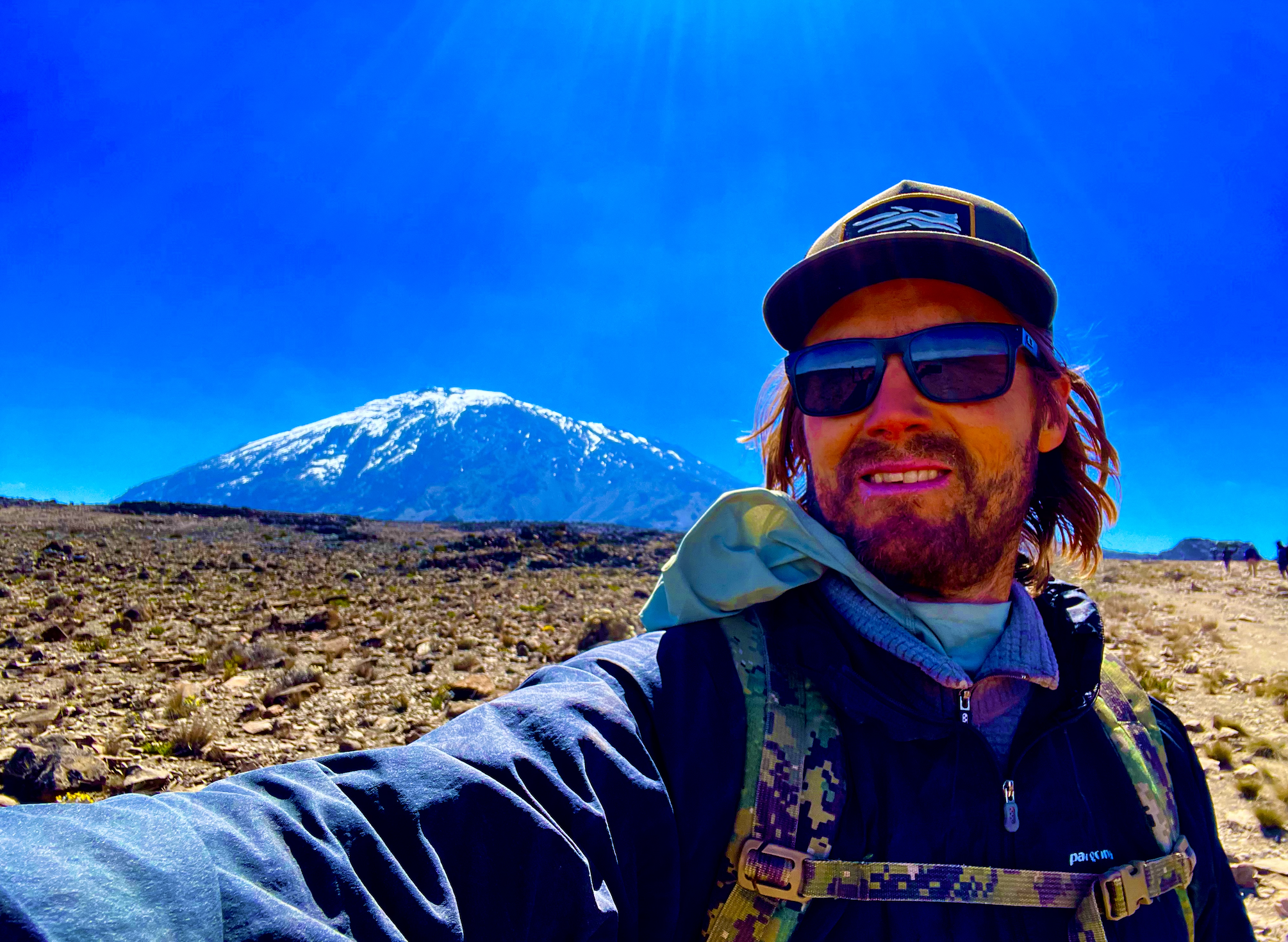
Hard to believe we climbed that… so far away now!
Day 8 (July 2): Down to Mweka Gate and Back to the Lodge
Up at 5am, and I might have gotten ten hours of sleep — no middle-of-the-night bathroom trip for once. Everyone on the mountain had the same thought: get me off this mountain! We packed, had coffee and breakfast, and started down at 7. The final hike was harder than expected — our legs were still recovering from summit day, and this stretch was tough enough on its own: roughly 7.5 miles, dropping from 12,434 feet to 5,347 feet. As we dropped back into the clouds and the forest, the trail turned from dry to muddy, but the views stayed incredible the whole way down, same as they had been the entire trip. At the gate we cleaned the mud off our boots, signed out with the park service, and loaded up for a 90-minute bus ride back to the lodge — high-fives all around, everyone thrilled to be off the mountain.
After checking in, everyone showered, ate, and relaxed before a final meeting with our guides to thank and tip them. I finally got that hot shower, then found my way to the hotel bar for a tequila on the rocks and some time by the pool with my legs soaking in the water — hard to overstate how good that tequila tasted. Later, we gathered to relive the trip, which is always one of the best parts of an expedition like this: looking back on it with the benefit of hindsight. Then we met our guides, assistant guides, and camp crew. We thanked them, tipped them, and said our goodbyes. Kilimanjaro is different from other climbs I've done in that respect — there's a whole team of people supporting you the entire way. At first it felt like cheating, not carrying my own tent or cooking my own food. But it's also an important part of the local economy: we get an incredible adventure, and they get to support their families. Feels like a fair trade to me. After saying our goodbyes, we had dinner outside by the pool — a great setting for a great final night — and I went to bed happily exhausted.
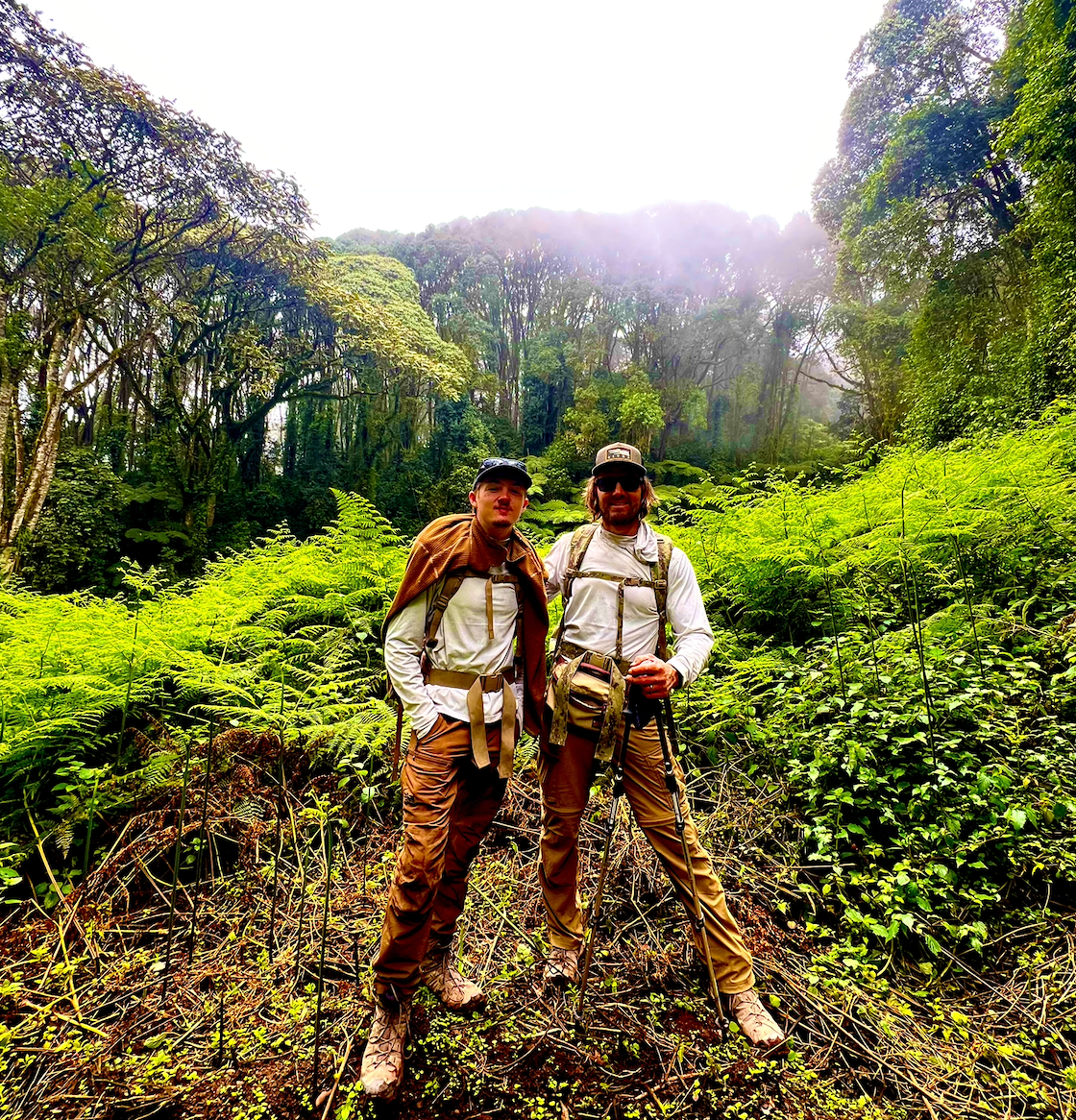
Back into the forest… amazing views continue!
Getting Home (July 3–4): The Long Journey Back
Woke up in an actual hotel bed, and didn't have to fight my way out of a sleeping bag just to use the bathroom. It's remarkable how quickly you can start taking something like that for granted again. Skipped breakfast but had real espresso instead of instant coffee, read my Bible for a bit, and updated my journal — mornings like this are the best. We packed up, checked out, and eventually shuttled back to JRO to start the trip home. Getting back to Omaha took a while: JRO to Dar es Salaam, DAR to Amsterdam, Amsterdam to Detroit, and finally Detroit to Omaha, with delays in both Amsterdam and Detroit. Mostly uneventful except when the person next to me filled two full barf bags, but I’ll save you the details on that. We landed after 8 p.m. on July 4th — nearly two weeks after we'd left. It was late, but it was still the Independence Day. My son and I rushed to get our bags and get home in time to catch what was left of the fireworks and some leftover barbecue with the rest of the family. A long trip and an awesome adventure, but it was SO GOOD to be home!
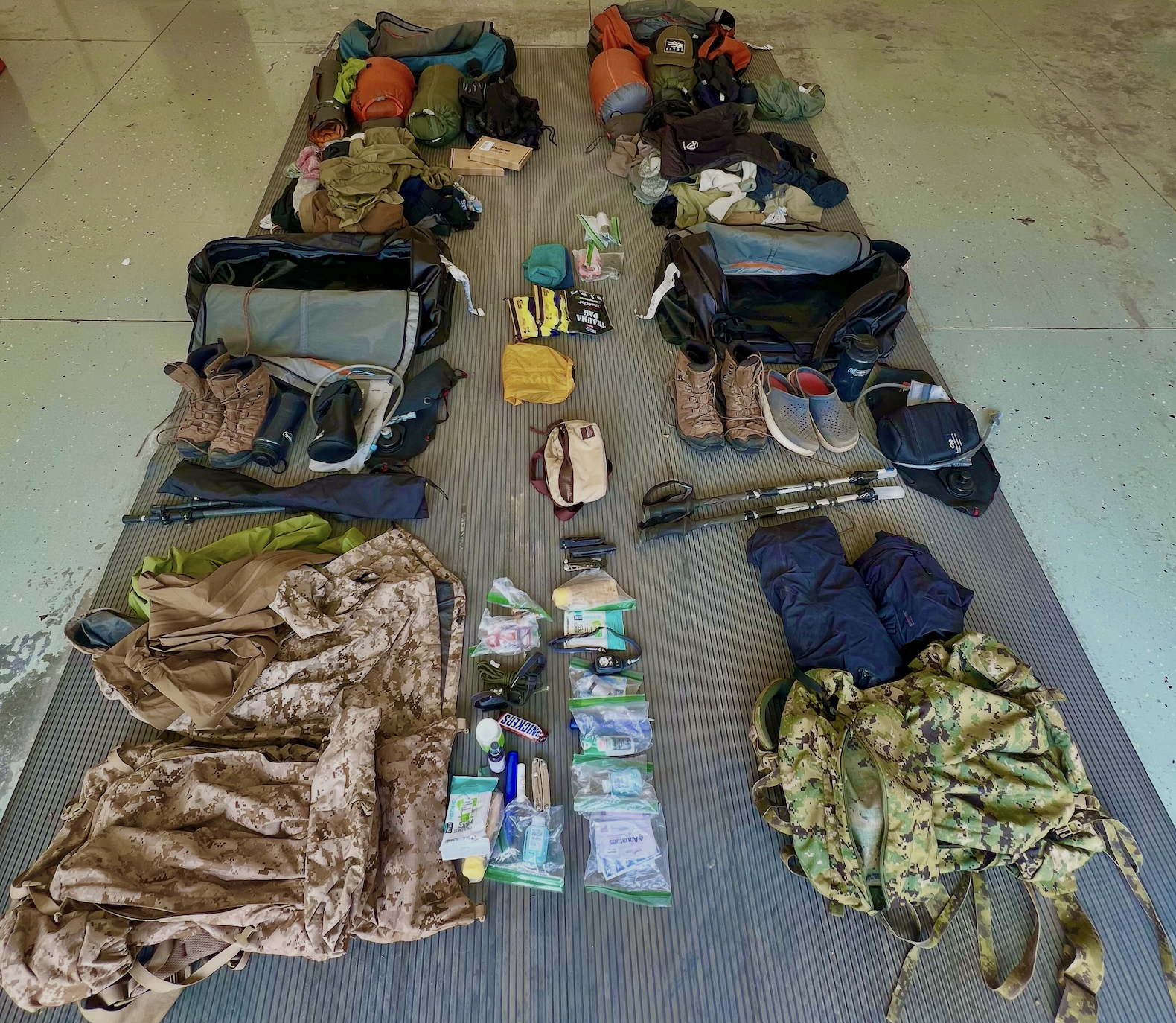
Aftermath: the trip isn’t really over until you clean, maintain and re-stow your gear!
Closing
That's the trip, more or less — I left out most of my gear notes, and I'll get into the lessons learned (and relearned) in another post. I've been on a lot of adventures over the years, from deployments to big wall climbs to hunting and fishing trips, and there's always something to take away, whether it's a new skill or something more personal about yourself. This one was no exception. But what's stuck with me most since coming home is the people — an incredible group of fellow climbers, including my own son, and guides, camp crew, and porters whose effort and attitude I can't say enough about. And most of all, the reason we were doing this in the first place: we chose to "suffer" for two weeks on that mountain. The people of Benin, where Global Partners in Hope is building a new medical facility and wells, don't get to choose. I'll think about that the next time I walk to the sink or the fridge for a glass of clean water.
(Additional information about the Summit for Hope Project)
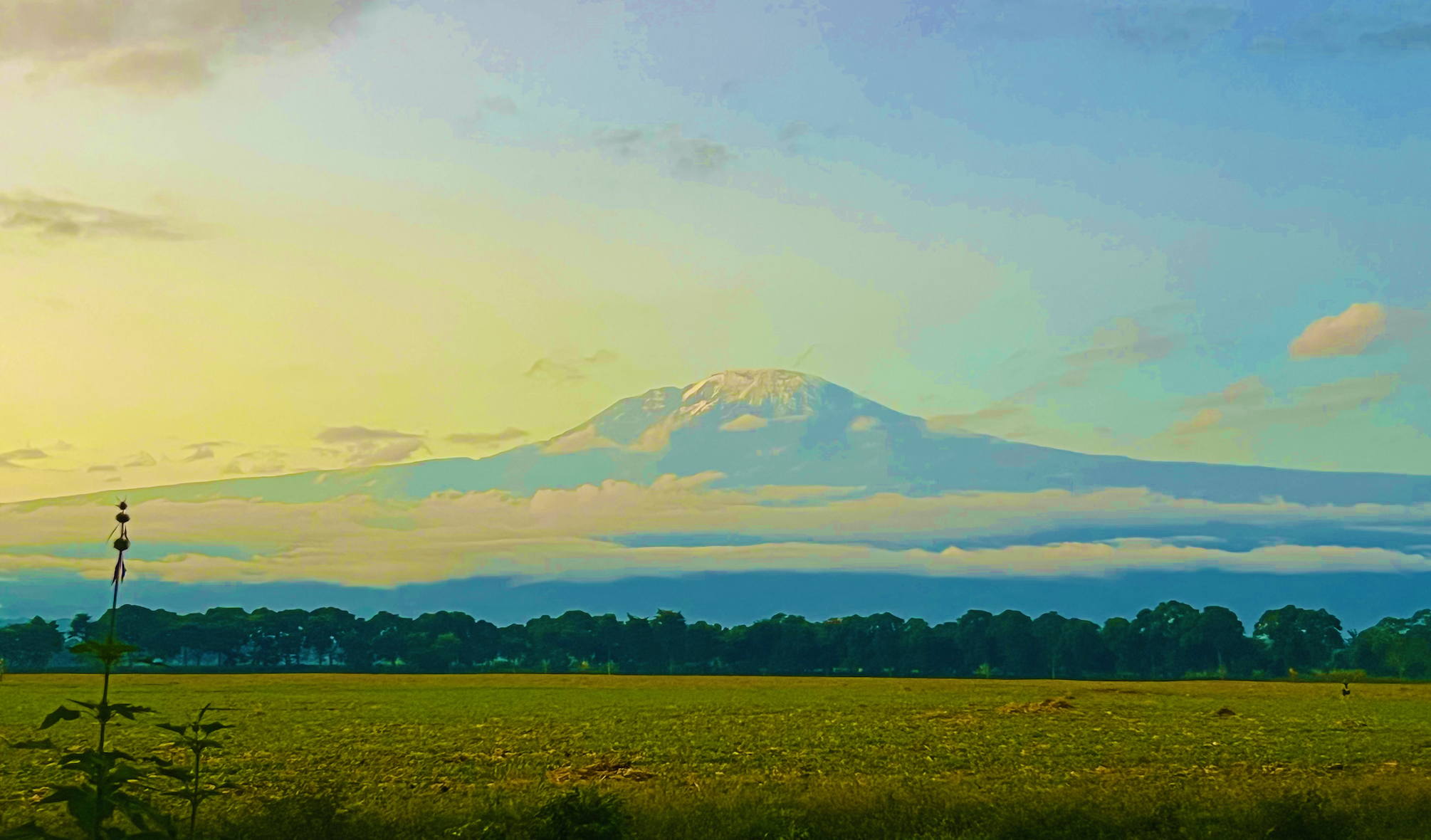
Kilimanjaro from our lodge… Wow.