

Lessons Learned
Mountain climbing is a challenging and rewarding pursuit. If you have the courage and willingness to suffer a little bit, you may be rewarded with an awesome experience. If you get lucky, you may even get to see the summit. But, if you pay attention, and are even a little bit self-aware, mountains can give you an even greater gift. They can teach you lessons that are valuable beyond the adventures at altitude and applicable to other areas of your life.
Sometimes, you must go do something challenging or uncomfortable to learn (or relearn) certain life lessons. My recent climb of Kilimanjaro did just that. Most of these ‘lessons learned’ were re-learned or reinforced because of our climb. They are valuable to me. So I thought I would share them with you.
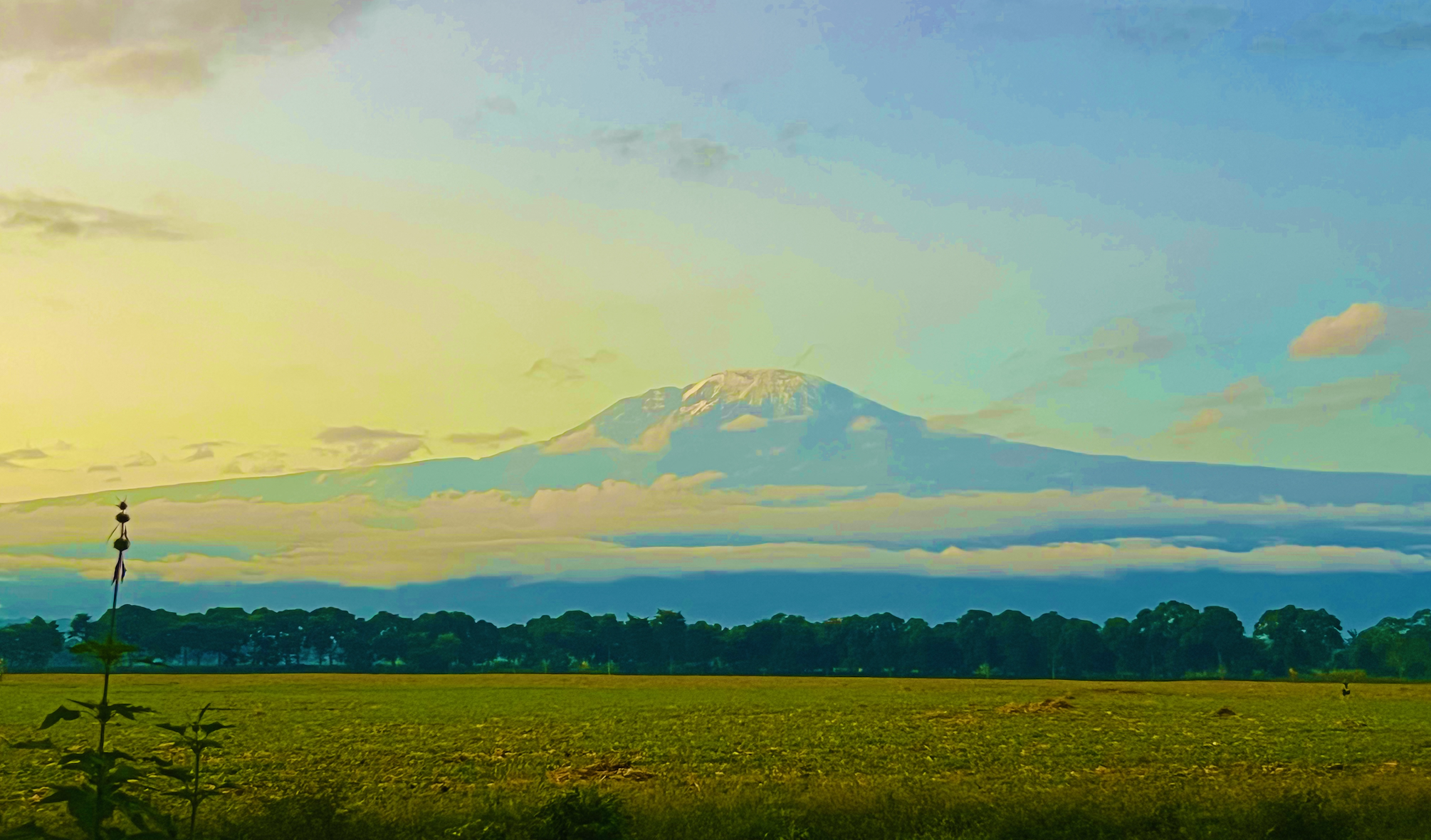
The mountain that reinforced so much of what I already knew: Kilimanjaro
Humility
As usual, the mountain humbled me. I’ve written a full article about this topic already. So, I won’t spend much time adding to it today. It has been said, “We don’t really conquer the mountain” when we climb it. As Sir Edmund Hillary said, “It is not the mountain we conquer, but ourselves.” I agree with his sentiment here. I would add that big mountains may be beautiful, but they are never tame. If you take what you are doing for granted or don’t pay attention, it can cost you. Weather, altitude, falls, or even just stomach issues can derail you and derail a climb. These things happen. They can make you miserable, prevent you from summiting, or even worse. The mountain was there before you and will be there long after you leave. So, stay humble, and stay focused until you safely return!
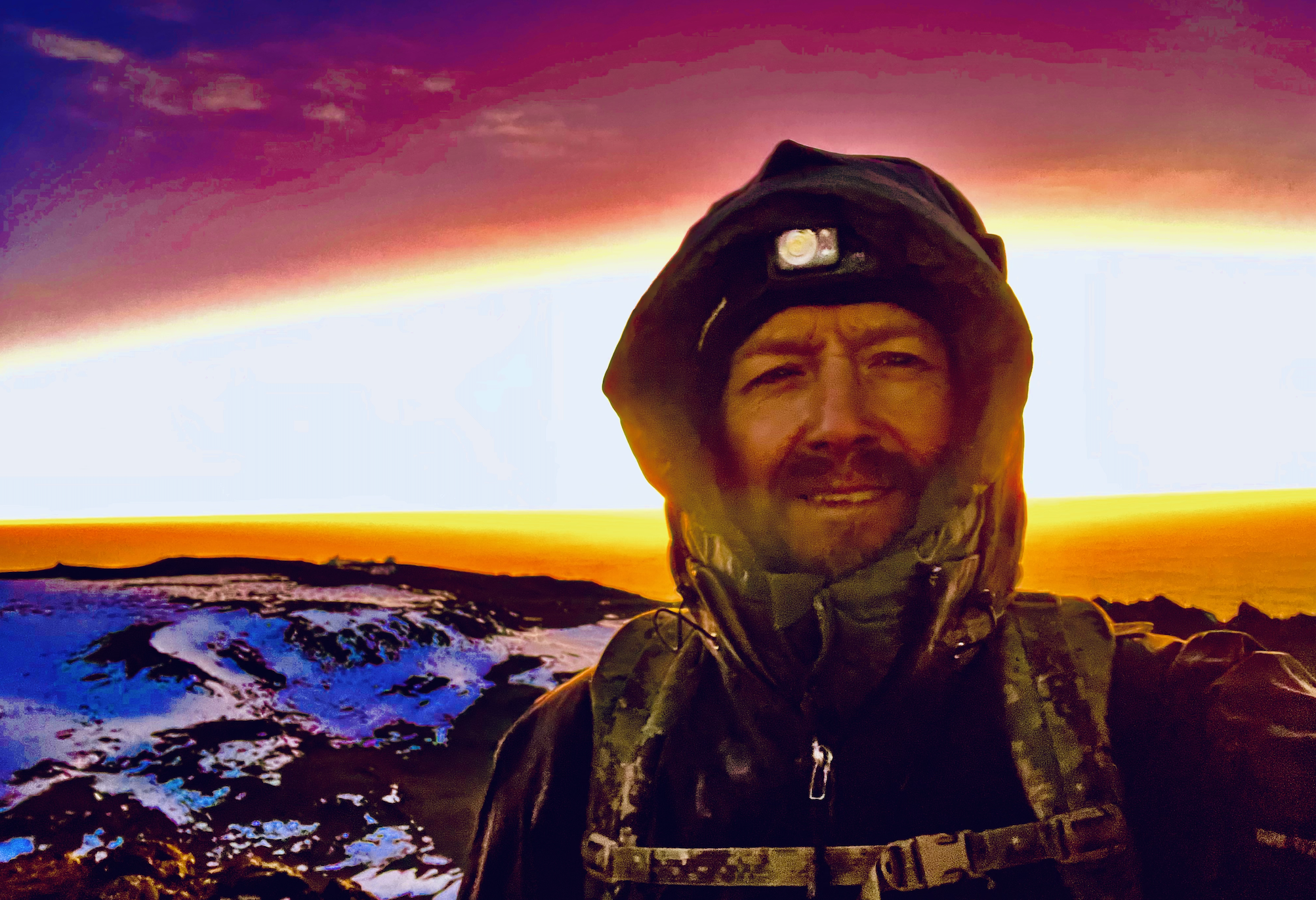
Humbled by the experience on the mountain… and the views!
Preparation
All mountains teach you the value of proper preparation, and Kilimanjaro was no exception. And, like humility, I previously dedicated an entire article to this topic. So, I won’t spend much time rehashing it now. Though maybe not as hard as either Denali or Aconcagua, Kilimanjaro is still challenging. Preparation is no less crucial. I felt well prepared from both a fitness and equipment standpoint. I could write a whole post on either of these topics, and maybe I will later. Suffice it to say, being as fit to hike / climb and having the right equipment makes a huge difference. Beyond summiting, it just makes the whole experience more enjoyable. As Archilochus wisely said, “We don’t rise to the occasion. We fall to our level of preparation.” That was as true on Kilimanjaro as it is anywhere else.
Grit
Climbing any big mountain is physically demanding. Kilimanjaro was no exception. Even though porters carried some of your gear, you still must put one foot in front of the other and cover roughly 44 miles and over 16,000 vertical feet. There are easy days and hard days. Summit day is the hardest. Everyone knows it requires some level of physical toughness. Few people realize it requires mental toughness as well. The climb involves nights spent in tents on ground pads and not soft beds. There’s the tedious process of filtering all your water or leaving your warm sleeping bag in the middle of the night to go to the bathroom. I would argue that it’s as mentally challenging as it is physically challenging. You must endure both physical and mental challenges for 6-days just to put yourself in a position to summit. Then, there’s a big physical and mental endurance requirement to summit and get back down safely. In many ways, it’s like BUD/S (Basic Underwater Demolition / SEAL) Training. It’s as much mental as it it physical.
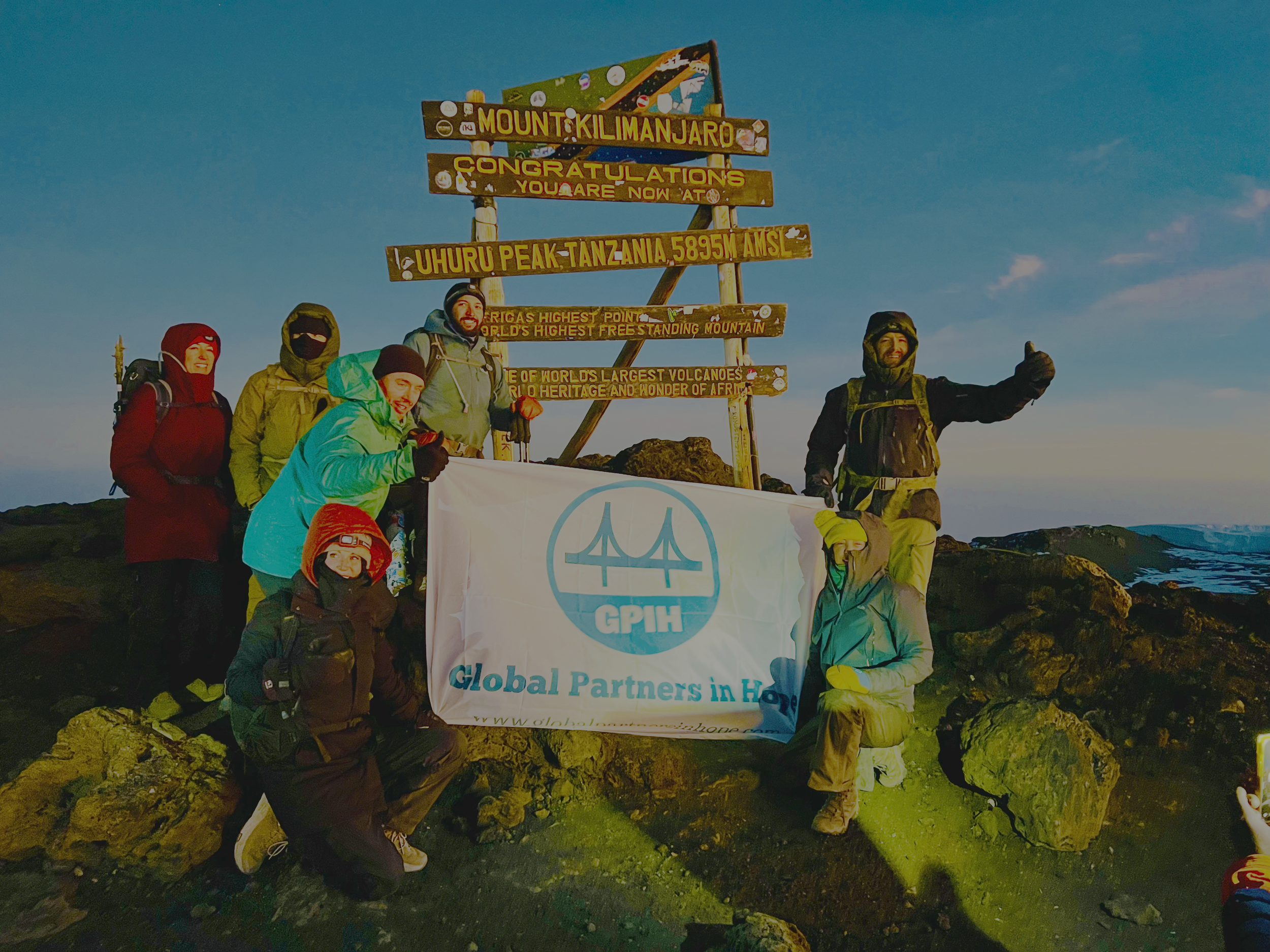
Summit day was the hardest and it took PLENTY of GRIT!
Teamwork
Unless you are a solo climber, climbing is a team effort. On technical climbs, one person leads a pitch while the other belays. On big expeditions, one person carries the tent. The other carries the stove and fuel (as examples). On long expeditions, you have good days and bad ones. Good teammates recognize when another climber is frustrated or lacking energy. A good teammate knows when to encourage the other and when to give them space. We had a great group on this trip, and we all got along very well. I was so impressed by the whole team. Our goal was not just to reach the top, but to raise money and awareness for a worthy cause. As a group, we made much more impact than any one of us could have done alone.
Then there was the team that supported us. This included our guides, porters, and other camp staff. On past climbs, I’ve had guides. But I haven’t had porters, people to make camp, or cook my food. At first, it felt like cheating. I should be carrying my own load. Then, I came to understand how this was such a big part of the local economy. The money they made helping us reach the summit could be as much or more than they could make in a few months farming or driving a cab. So, it was a fair trade! I was so impressed by these people. They walked, for the most part, as many miles and as many vertical feet as us. Some more and some less. All of them had heavier loads, older equipment, and rougher conditions. They were always eager to help and always did so with a smile. They were kind, compassionate and selfless. Plus, they were just plain tough. Wanna be tough guys like me can appreciate real toughness when I see it. I saw it in all of them!
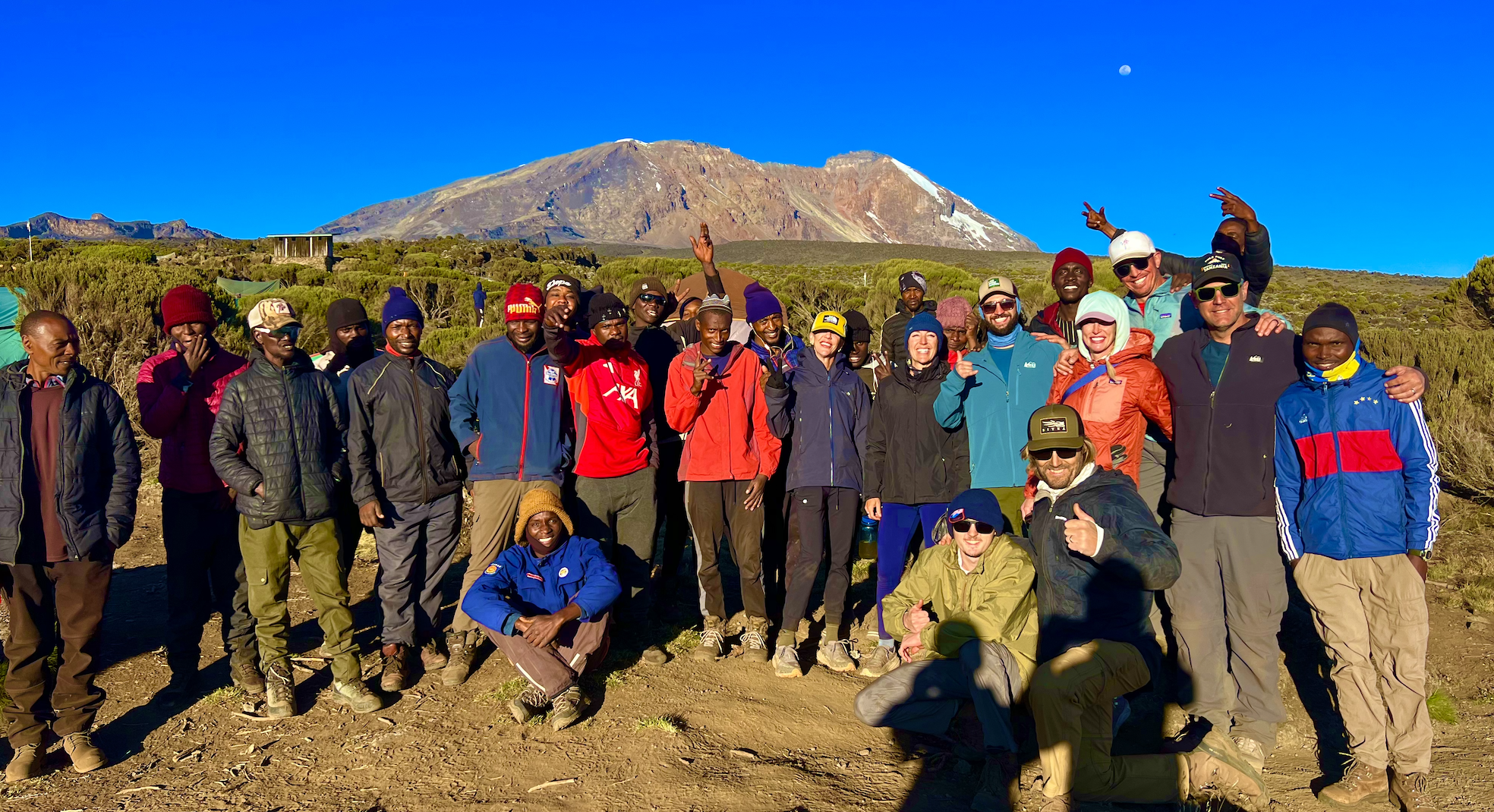
The whole TEAM with Kilimanjaro still in the distance!
Leadership
Teamwork and leadership go together. There are times when follow and times when you lead. Again, this could mean leading a technical pitch of a route. Or just leading by example and staying positive when conditions get rough. At some point, everyone steps up.
Then there’s the guides. Having a good guide is important. It’s comforting to be with someone who has been to the top and come back down safely. This climb was no different. Our lead guide, Bruno, and his assistants did an amazing job. This leadership started before we even left the lodge. Bruno inspected our gear before we completed our final loadout. That makes you feel much more confident about your equipment. On the mountain, the guides did nightly med-checks and briefed the plan for the next day. While climbing, they kept us on the correct path and kept the pace. They made sure we acclimated well and that we’d be physically and mentally ready for summit day. I cannot overstate the importance of having a good guide. Ours were great!
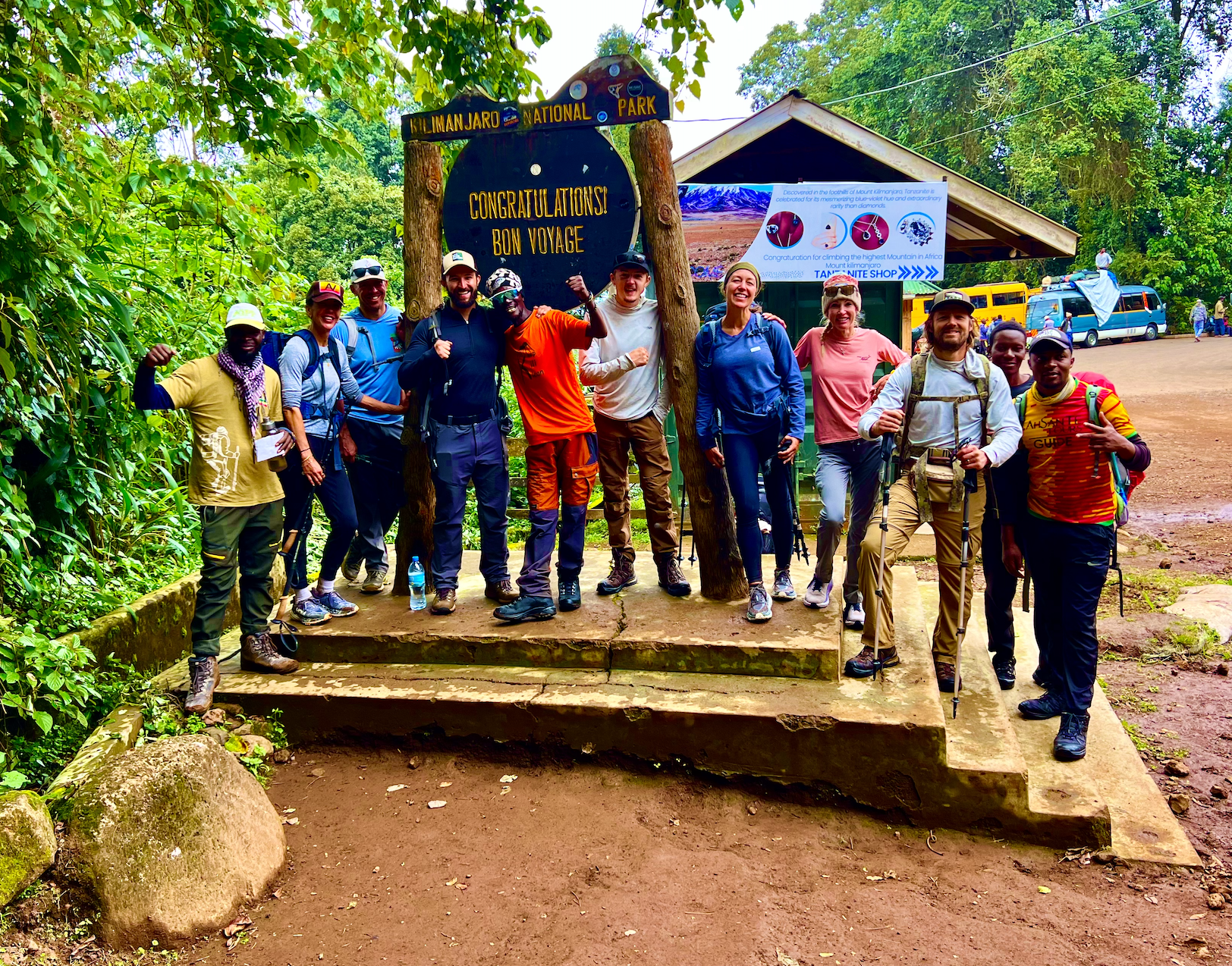
Us Climbers and Our Guides!
Zoom Lens
It’s important to know when to zoom out and when to zoom in. It’s a paradigm I’ve used to help manage my attention before. It was useful on Kilimanjaro as well. It’s important to have a goal or something to aim at. You remind yourself of that goal when things get hard. This provides a little ‘purpose to your suffering.’ Then there are times when you zoom in and just focus on the present. This helps you stay safe on the next step or when you tie the next knot. If you only look at the summit, it can be easy to get discouraged. It looks so high or feels so far away. I first learned this skill in SEAL Training. You always remember why you are there, again to provide a ‘purpose for your suffering.’ Then there are times when you forget about graduating and just stay in the moment. You think about finishing what you are doing and simply making it to lunch. You compartmentalize and take off bite-sized chunks. You zoom out when you need a reminder of your ‘why.’ Then zoom in when you need to be present or don’t want to think about how far you are from achieving that goal. Soon, the hours or days pass by. You make it to the top or you make it to the end.
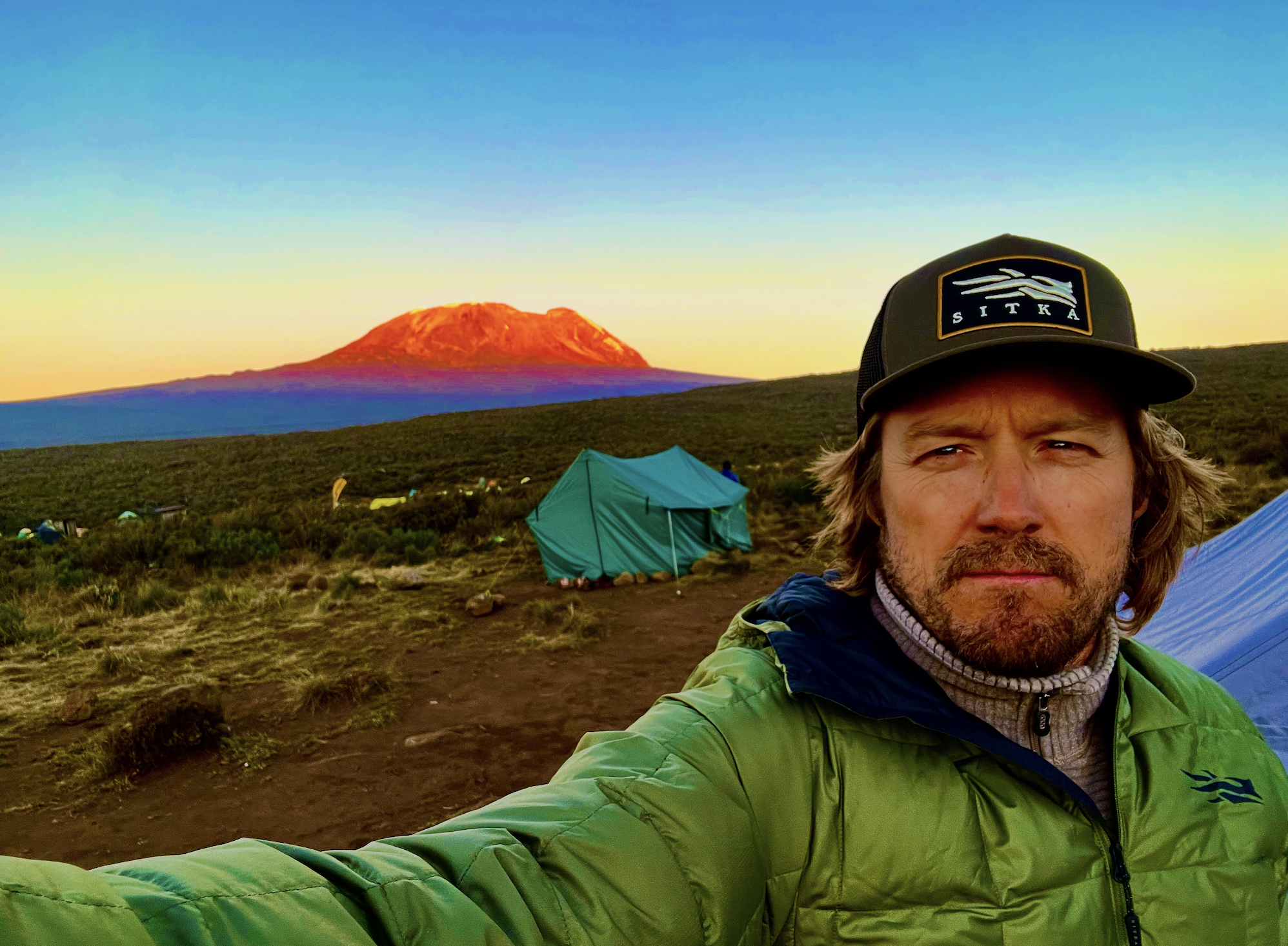
Miserable early and the mountain is still so far away!
Finishing
This one was first learned on Denali. After a long summit push, we finally reached the top. It was a very long, very hard, and very cold day. We took a moment to celebrate and memorialize it with photos. Then our guide, Mark Twight, brought us back to earth. “Good job. You made it to the top. You’re halfway done. Most people die on the way down.” I’ll never forget when he said that. I wrote more about this in a previous article. So, I’ll just summarize here. The goal is NOT just to summit. The goals are to return home alive, to return home as friends (if you’re with a group), and return home having summited… in that order! Big mountains are burial grounds for those who were too focused on reaching the top but not focused enough on coming home alive. Kilimanjaro might not have as high of a body count as some of these more technical climbs, but the lesson is still true. The climb is not over when you reach the top. Slips, trips, and falls, where people sprain ankles or injure knees, are more likely to happen on the way down… especially on sore legs after a 6-hour push to the top. A sprained ankle or twisted knee is bad anywhere. It can be REALLY bad if you are still a few miles away from the trail head. So, you celebrate briefly and enjoy the moment (and the view). Then, you lock in and get back safely!
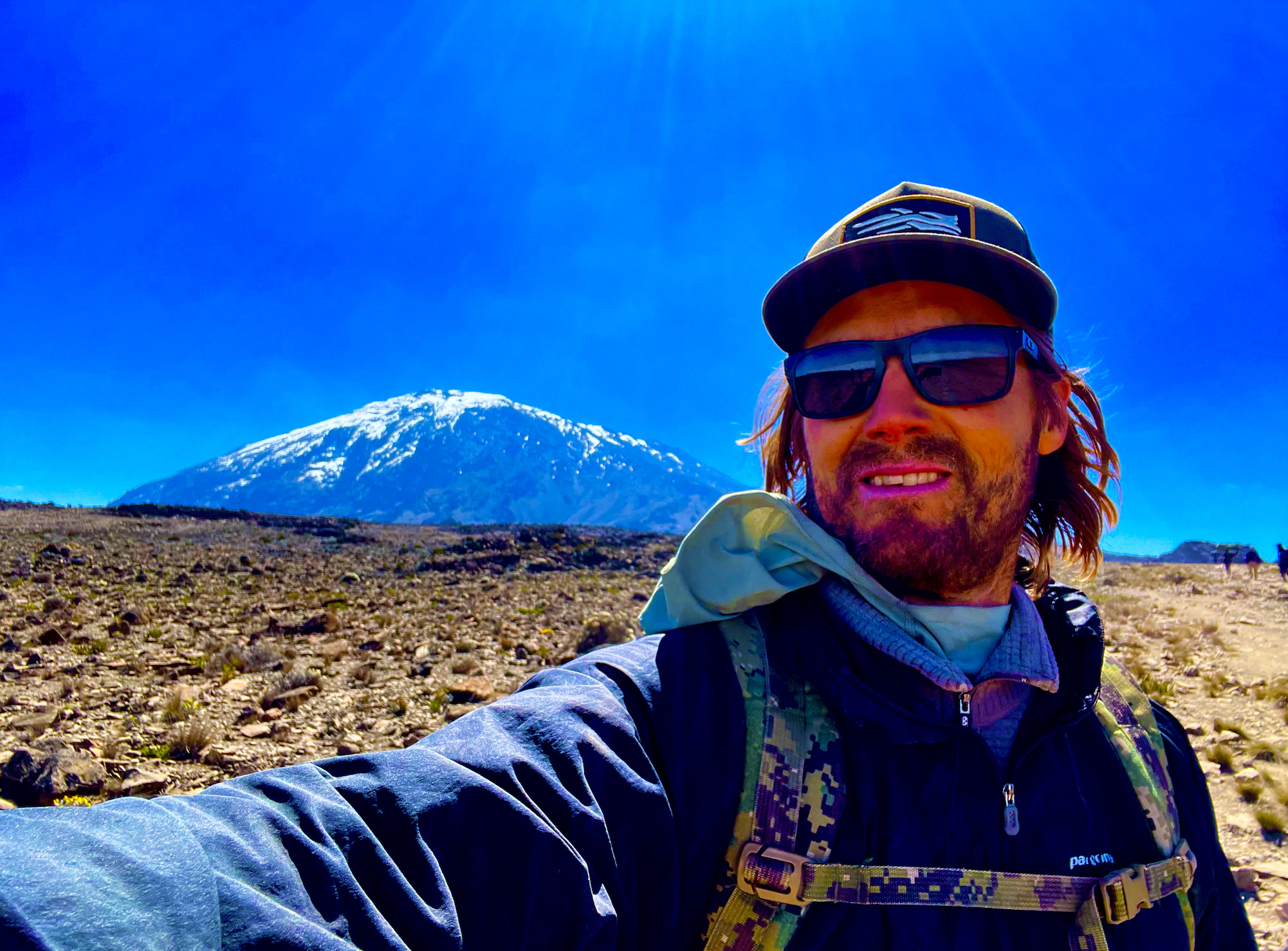
The Mountain in the rear view, but still not home!
Gratitude
As with previous expeditions, Kilimanjaro re-sets your baseline. When I finished, I was not just grateful to be done. I was grateful for all the things I realized I had taken for granted. I’m grateful for my soft bed, climate-controlled home, hot shower, running water, and of course my toilet! Just days before leaving, I had taken all of these for granted. I had to leave the comforts of home and civilization to be reminded how good I have it.
Trips like these are good re-sets and reminders for how good we have it and how much we have to be thankful for. There are people in the world, in places like Benin, who endure far worse than we ever did on that mountain. They don’t choose it. It’s just life. They endure it daily and most don’t even complain. When you see others with so much less than you have, going through life with a smile and without whining… you realize how blessed you are.
Purpose
Previous climbs, though with a team, were more of a selfish pursuit. This one was different. Yes, I did want to climb another one of the 7-Summits. Yes, I wanted another adventure. Yes, I wanted to share an amazing experience with my son. I even wanted to do something challenging and get outside of my comfort zone. But the real purpose behind this trip was bigger than a climb, bigger than an adventure, bigger than an experience, and bigger than some personal desire to go do something hard again. We climbed this mountain, together as a team, to raise money and awareness for Global Partners in Hope. We took time off of work, time away from our families, and missed 4th of July Parties to support the work of GPiH. As a result, we will be able to help fund water wells and a new medical center in Benin. Thanks to the generosity of so many, we were able to make a dent and make an impact in the lives of those less fortunate than us.
The climb may be over, but the story of the climb is not. We are nearing our fundraising goal and you can still contribute if this purpose speaks to you.
Onward and Upward!
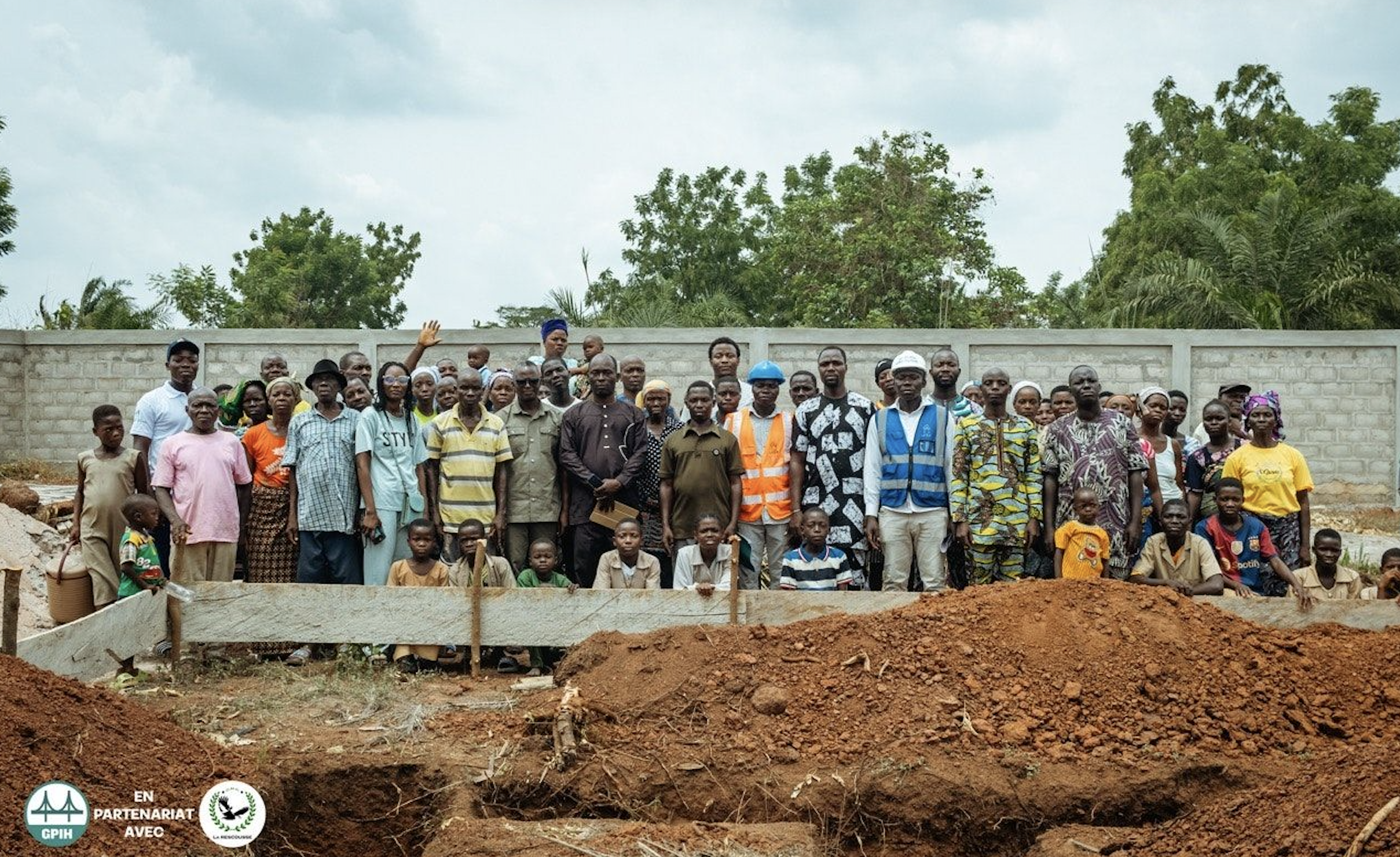
The real REASON we climbed Kilimanjaro!